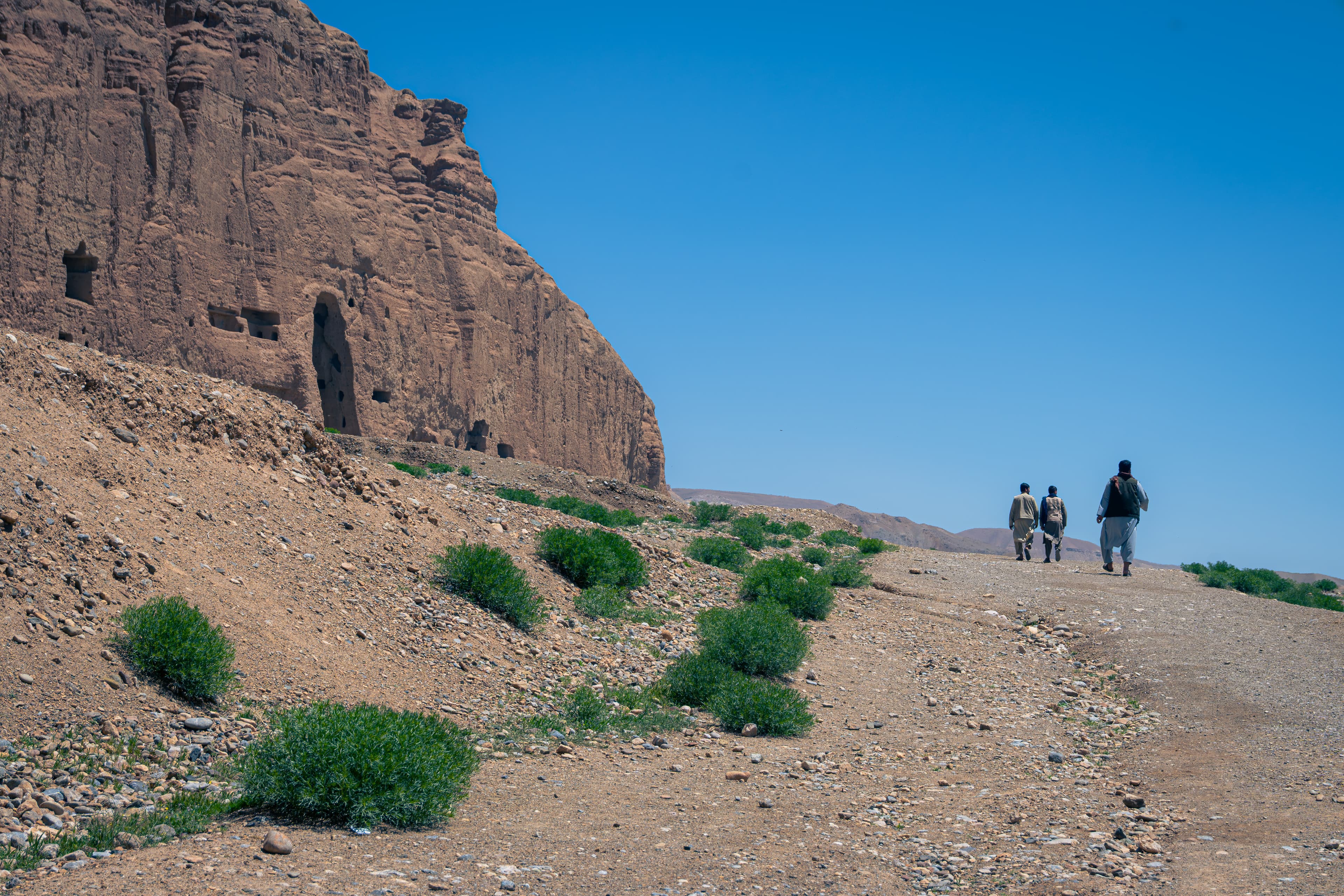
Carved into the towering cliffs of Bamiyan, the Buddha niches are among the most extraordinary traces of the valley's ancient past. Once home to two monumental statues, the niches and surrounding caves form part of a vast sacred landscape shaped by centuries of Buddhist art, pilgrimage, and cultural exchange along the Silk Road.
History & Details
Created between the 4th and 6th centuries, the great Buddha figures were among the largest standing sculptures of the ancient world. Their surrounding caves were decorated with paintings and served as places of worship and retreat for monks and pilgrims. Bamiyan's location along the Silk Road brought together artistic traditions from Central Asia, India, Persia, and beyond, leaving a remarkable cultural legacy in the cliffs.
Gallery
Visitor Experience
“You can stand within the immense niches and explore the network of caves carved into the cliffs around them. The scale of the site is difficult to grasp from photographs: towering rock faces, traces of ancient paintings, and the vast Bamiyan Valley unfold around you. Standing beneath the cliffs, the silence and extraordinary sense of space offer a powerful connection to the civilizations that once passed through this ancient crossroads.”
Trips That Visit Buddha Niches

Don't see a trip that fits? We can build one entirely around the places you want to see.
Plan a Custom Visit